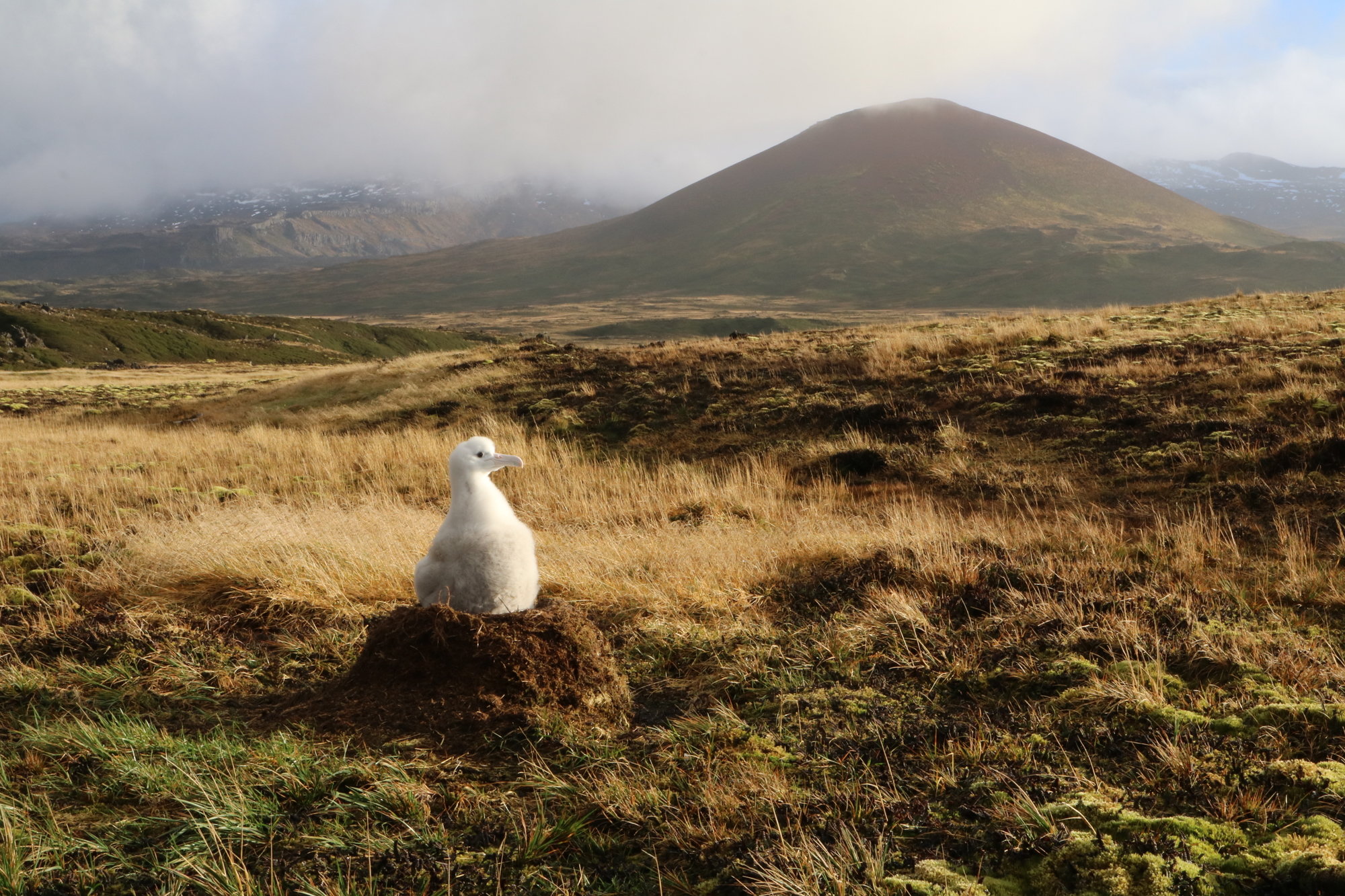
An Albatros chick sitting in its nest. Image Credit: Prof. Dr. H. Cynthia Chiang
Motivated by the search for an elusive cosmic radio signal our research group is running an experiment on Marion Island located in the sub-Antarctic. In less than a week we will finish our pre-expedition quarantine, and start our voyage across roaring oceans to make our way down to Marion. So far our entire team has tested negative on our first PCR-test. However, instead of sharing the miseries of quarantine with you, I’ll introduce our experiments, and tell you why we’re going all the way down to the sub-Antarctic.
The First Stars in the Universe
Back in the day, about 13.3 billion years ago, the Universe looked wildly different than the one we know and observe today. Nowadays, planets, stars, galaxies, and black holes seem to be ubiquitous. Back then, not so much. In fact, the universe was so wildly different that we’re not even quite sure how stars and galaxies formed in the first place. How did the Universe transform from a cosmic soup of hydrogen, helium and lithium, into the exciting universe we see today filled with stars and galaxies and the like?
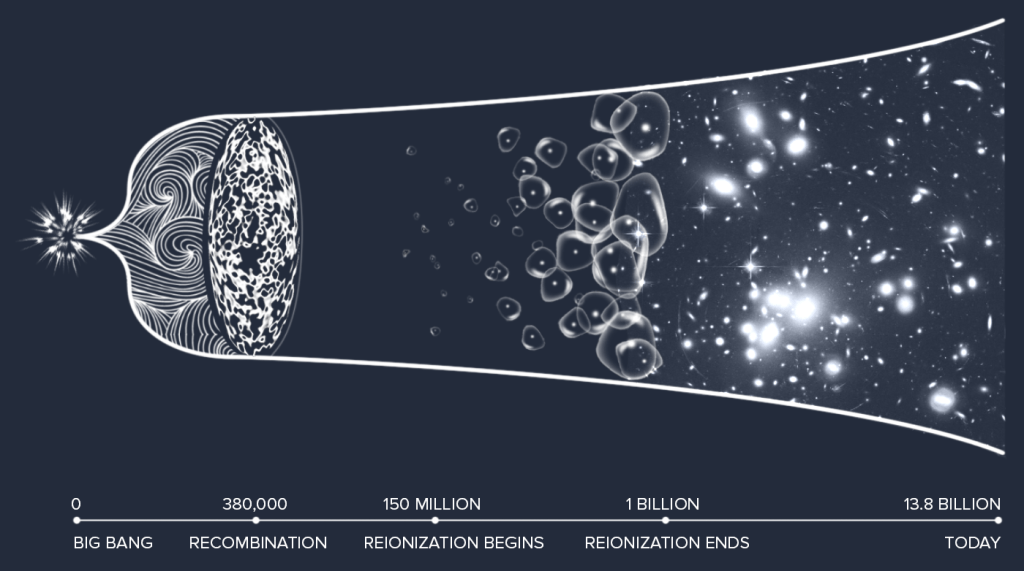
We know that hydrogen gas emits light, radio light to specific. By staring into furthest corners of the Universe we hope to receive light that has been travelling towards us for billions of years. By capturing that radio light, we will be able to retrace the history of the Universe. Astronomers around the world have built radio telescopes hoping to understand what happened in those first million years. The instruments that we have built are called PRIZM and ALBATROS.
PRIZM: A Cosmic Thermometer
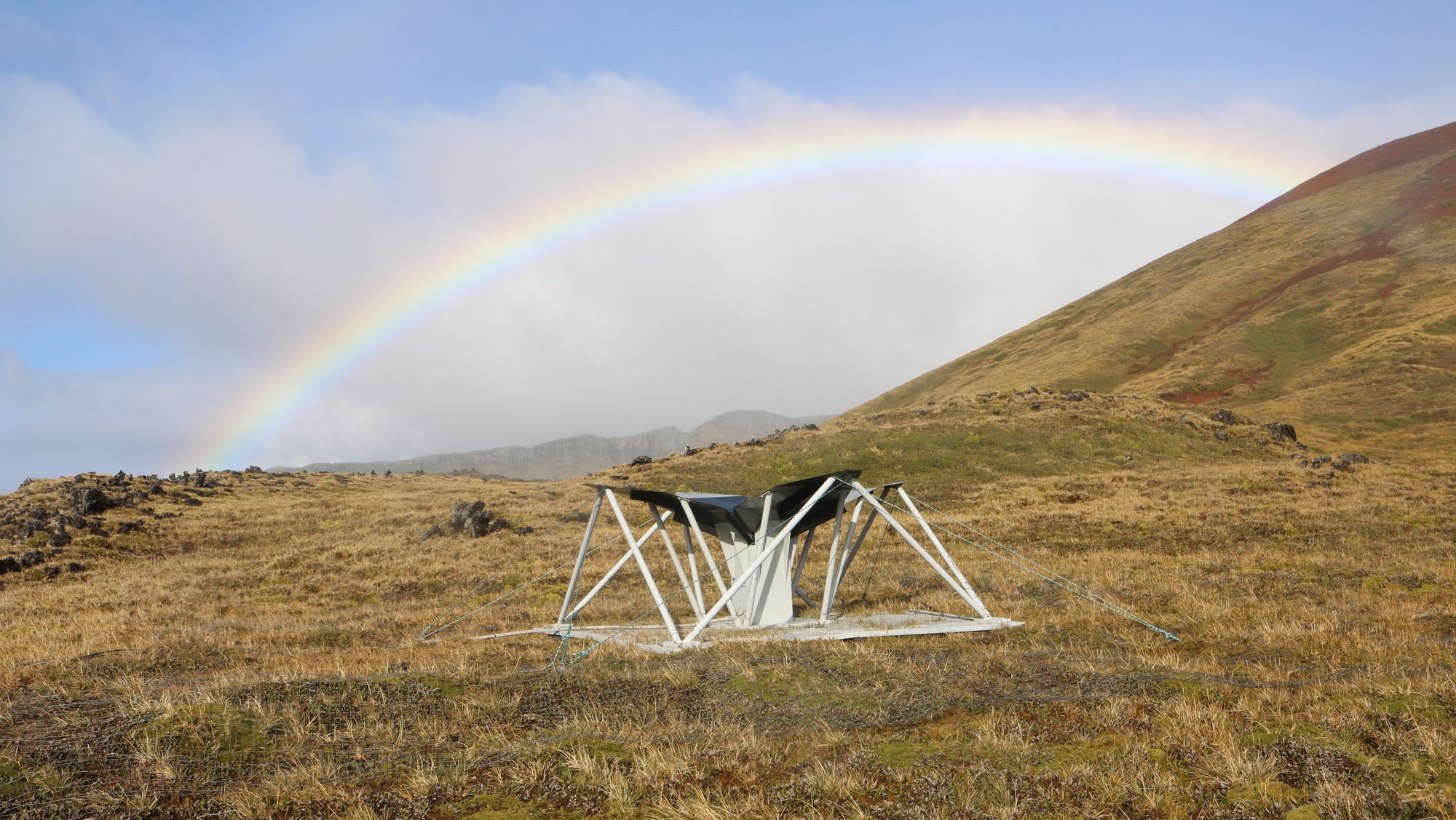
Probing Radio Intensity at high-Z from Marion or PRIZM, are two antennas that measure the amount of radio light we receive from the Universe at frequencies below 250 MHz. By carefully measuring how bright radio signals at these lowest frequencies are, we can deduce the temperature of hydrogen gas at these early times. This in turn tells us how that cosmic soup ended up fuelling the very first stars in the Universe. One of the main challenges is getting far away from human-made radio signals created by modern day technology. This has motivated us to go all the way to Marion Island, 2000 km away from the mainland, one of the most radio-quiet places in the world.
ALBATROS: An Island-sized radio telescope
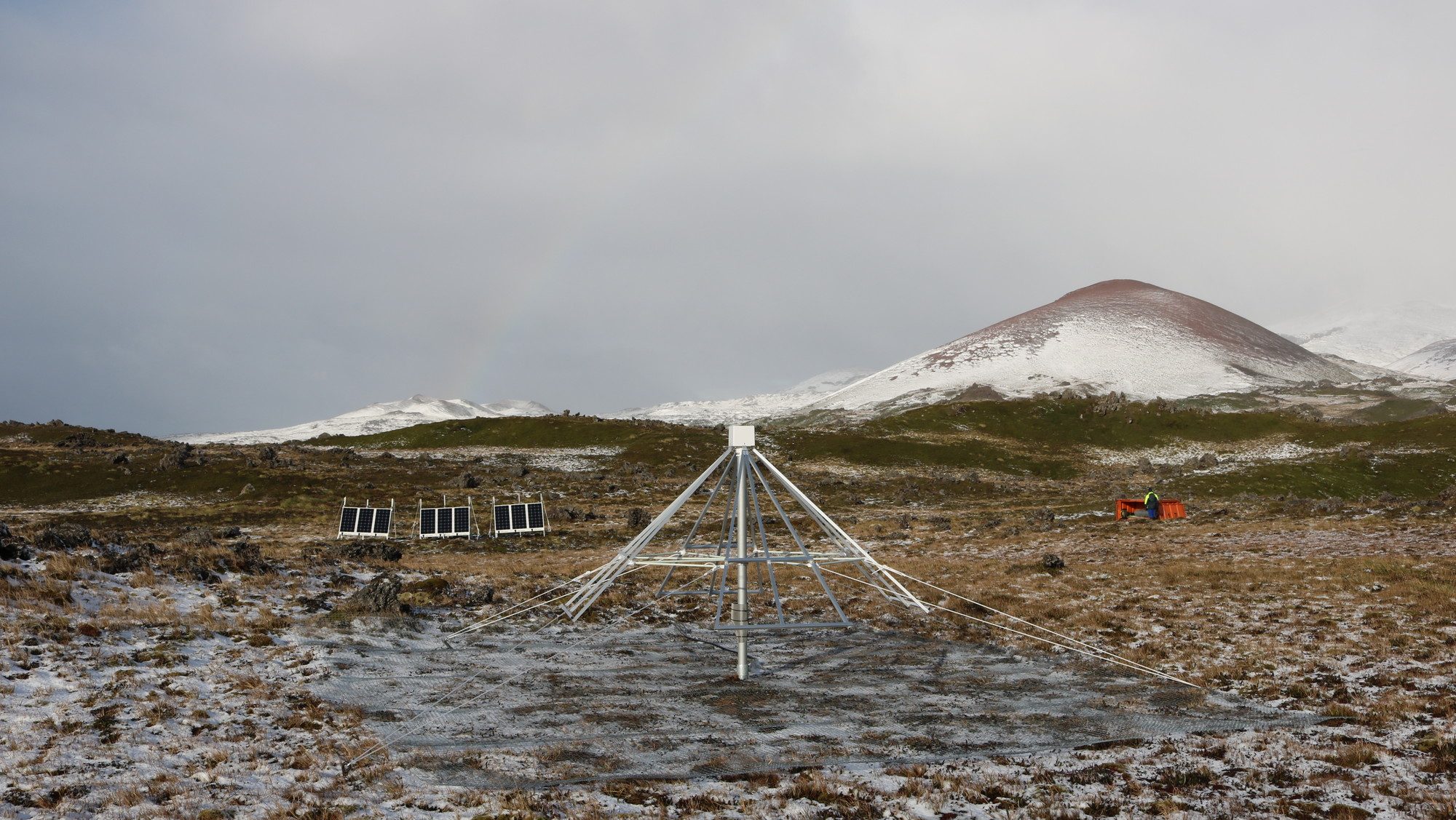
With The Array of Long Baseline Antennas for Taking Radio Observations from the Sub-Antarctic/Seventy-Ninth Parallel, or ALBATROS for short, we aim to make clear images of the Universe at some of the lowest radio frequencies by building an island sized radio telescope. To turn an island into a radio telescope we are deploying several autonomous antennas across the island. Every year we’ll take the data back to the mainland and digitally combine it. This enables us to create a virtual telescope at the size of an island. Astronomers haven’t observed the Universe at these ultra-low frequencies since the last century because it is incredibly challenging. The main challenge at these frequencies is that the Earth’s ionosphere blocks radio signals, blurring the images we’re trying to make. The closer you get to the poles, however, the more transparent the ionosphere becomes, and the clearer our images.
Marion Island provides a unique window into the Universe, motivating us to take part in this annual expedition organised by the South African Government’s Department of Forestry, Fisheries and the Environment. While our expedition team has been in quarantine, our cargo has finally made it to Cape Town and into the shipping containers. To pass our time, and prevent us from going insane, we have been making final tweaks to deployment and data analysis software. If the odds are in favour, it will have all been worth it and we will all be sailing down to the Sub-Antarctic in a couple of days! Stay tuned for more.

 Ronniy Joseph
1 Comment